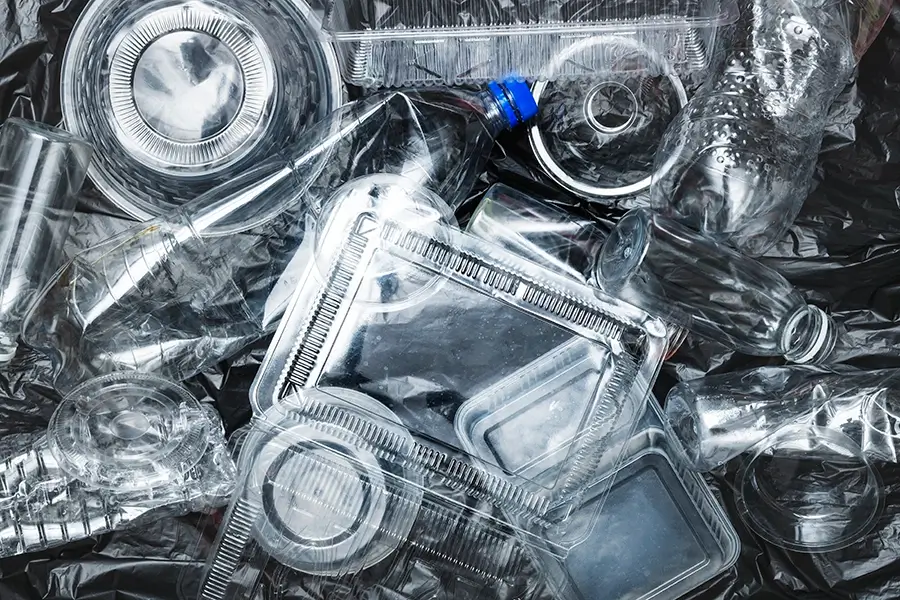
The word “plastic” describes a large family of materials with different chemical structures and performance characteristics. Some plastics melt at different temperatures, some contain multiple layers, and others include additives that complicate processing.
That is why two packages that look similar may have very different recycling outcomes.
Recyclable Does Not Always Mean Recycled
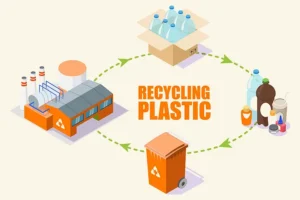
For plastic to be recycled in practice, several things must happen:
- A local program must accept it.
- The collection system must capture it.
- A sorting facility must identify and separate it.
- A processor must be able to clean and reprocess it.
- A manufacturer must have a use for the recovered material.
Ifing. Technical recyclability alone is not enough. A package may be physically capable of being reprocessed, but it is unlikely to be recycled if facilities cannot reliably sort it or if there is no viable market for the recovered material.
Resin Type Matters
Plastics are often marked with a number from 1 through 7 inside a triangular symbol. This is a resin identification code, which identifies the general type of plastic used in the product.
It is not a guarantee that the item is locally recyclable.
Some resin types, particularly PET and HDPE used in many bottles and containers, are commonly collected because established sorting systems and end markets exist for them. Other resins may have limited collection or processing options.
Items made from the same resin may also have different recycling outcomes because shape, color, additives, and other components affect how they move through the system.
Packaging Format Affects Sorting
Recycling facilities do not sort items based only on their chemical composition. They also rely on physical characteristics such as size, shape, rigidity, density, and color.
For example:
- Small items may fall through sorting equipment.
- Flat plastic may travel with paper.
- Flexible films can wrap around machinery.
- Dark pigments may make certain packages harder for optical sorters to identify.
- Unusual shapes may be directed into the wrong material stream.
A material can therefore be recyclable in theory while its packaging format makes it difficult to recover in practice.
Multilayer Packaging Is More Complex
Many packages combine different materials to provide strength, prevent leaks, block oxygen or moisture, and extend product shelf life. A pouch, for example, may contain several types of plastic along with adhesives, coatings, ink, or metalized layers.
These combinations can deliver excellent product protection, but conventional recycling systems may not be able to separate them economically. If incompatible materials remain together during reprocessing, they can reduce the quality and performance of the recycled resin.
Designers must balance product protection with end-of-life compatibility. Packaging that reduces food waste or prevents product damage may still provide environmental benefits, even when its recycling options are limited.
Labels, Closures, and Adhesives Matter
A package is more than its main container. Labels, sleeves, caps, seals, closures, inks, coatings, and adhesives can all influence recyclability.
These components may cause problems when they:
- Are made from materials incompatible with the primary container
- Cover too much of the package for sorting equipment to identify it
- Do not separate during washing
- Leave adhesive or ink residue behind
- Melt at a different temperature from the main resin
- Change the color or performance of the recovered material
Evaluating the complete packaging system is therefore more useful than considering the main container alone.
Color Can Limit the Next Use
Clear or lightly colored plastics can often be turned into a broader range of new products. Strong pigments may restrict the recovered material to darker applications, while some black or very dark packaging can be difficult for certain optical-sorting systems to detect.
Color does not automatically make a package unrecyclable, but it can affect sorting accuracy, recovered-material value, and potential end uses.
Contamination Reduces Material Quality
Food, liquids, dirt, and nonplastic components can interfere with recycling. Contamination may increase processing costs, create odors, reduce material quality, or cause an otherwise recyclable item to be discarded.
Consumers should empty containers and follow local preparation instructions. Packaging designers can help by creating products that are easy to empty and by avoiding components that are difficult to remove during washing.
Local Infrastructure Is a Deciding Factor
Recycling capabilities vary among countries, states, municipalities, and service providers. Programs accept materials based on their equipment, processing relationships, local policies, transportation costs, and available markets.
As a result, the same item might be accepted in one community and excluded in another. Businesses should avoid assuming that a package is universally recyclable simply because one facility can process it.
End Markets Complete the Process
Recycling only works when someone can use the recovered material. Manufacturers need recycled plastic with predictable characteristics, including composition, cleanliness, color, strength, and consistency.
Strong end markets create demand for collected material and support investment in recycling infrastructure. Without that demand, even technically recoverable plastic may have limited practical recycling opportunities.
Designing for Real-World Recycling
Companies can improve recycling compatibility by considering the entire life cycle of a package during development. Helpful strategies include:
- Selecting materials collected and processed at an appropriate scale
- Favoring compatible components when possible
- Minimizing unnecessary layers, coatings, and additives
- Choosing labels and adhesives that work with the intended recycling stream
- Avoiding formats that sorting facilities struggle to identify
- Testing the finished package under realistic processing conditions
- Supporting recycling claims with current, credible evidence
No single design rule applies to every product. Food safety, product protection, accessibility, performance, and regulatory requirements must also be considered.
The Bottom Line
Whether a plastic item is recyclable depends on more than the symbol printed on it. Successful recycling requires compatible material, recoverable packaging design, consumer participation, suitable infrastructure, effective processing, and demand for the resulting resin.
Understanding these factors helps companies make better design decisions and communicate recycling information more accurately.
Need help assessing a package’s compatibility with established recycling systems? Explore PFE’s testing and consulting services.